PRETORIA, SOUTH AFRICA — As South African motorists and logistics companies catch their breath after the record-shattering fuel hikes in April, a second, more severe “fuel cliff” is looming on the horizon for Wednesday, May 6, 2026. Financial analysts and energy experts are warning of a perfect storm of expiring tax relief and global geopolitical volatility that could see petrol and diesel prices jump by as much as R4.50 per litre in a single adjustment.
The projected increase represents one of the most significant monthly price hikes in South African history, threatening to push the cost of 95-octane petrol well past the R30.00/litre mark in inland regions.
The “Double Blow” Mechanism
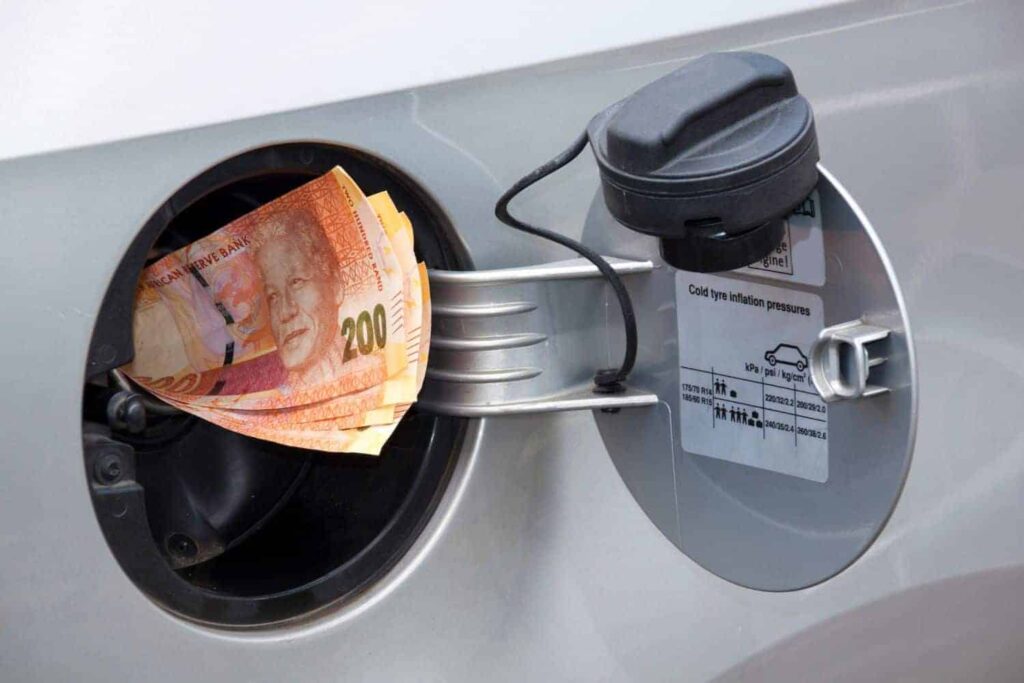
The anticipated May increase is driven by two distinct but equally powerful financial pressures: the expiration of emergency government relief and a worsening international energy market.
1. The Expiration of the R3.00 Levy Relief
In late March 2026, the National Treasury implemented a temporary R3.00 per litre cut to the General Fuel Levy (GFL) to cushion consumers against the initial shock of the US-Iran conflict. This relief was a vital lifeline, turning a projected R6.00+ petrol hike into a “manageable” R3.06 increase for April.
However, this relief is currently scheduled to expire on Tuesday, May 5, 2026. Unless Finance Minister Enoch Godongwana announces an extension—a move that would cost the fiscus roughly R6 billion in monthly revenue—the R3.00 will be automatically added back to the price structure of both petrol and diesel.
2. The International “Under-Recovery”
Beyond the tax adjustments, the Basic Fuel Price (BFP) continues to rise. International Brent Crude oil prices are currently hovering between $95 and $105 per barrel as the closure of the Strait of Hormuz continues to disrupt global shipping lanes.
Compounding this is the weakness of the South African Rand, which has struggled to gain ground against the US Dollar, trading in the volatile R18.50 to R18.80 range. Early data from the Central Energy Fund (CEF) suggests an additional under-recovery (the difference between the local price and the actual cost of importing) of between R0.50 and R1.50, depending on the fuel grade.
Projected Price Shifts for May 2026
Based on current data snapshots, the following adjustments are expected on the first Wednesday of May:
- Petrol (93 & 95): Projected increase of R3.50 to R4.00 per litre.
- Diesel (0.05% & 0.005%): Projected increase of R4.00 to R4.50 per litre.
- Illuminating Paraffin: Projected increase of over R3.00 per litre.
The Socio-Economic “Ripple Effect”
A fuel hike of this magnitude is never contained at the pump; it acts as a primary catalyst for broader inflation.
The Commuter Crunch
For the millions of South Africans reliant on the minibus taxi industry, the May hike is a direct threat to household stability. Transport costs already consume an estimated 30-40% of monthly income for low-earning workers. Taxi associations have indicated that while they absorbed some of the April costs, a further R4.00 jump would make a nationwide fare increase inevitable.
The “Farm-to-Fork” Crisis
May is a critical month for the South African agricultural sector, marking the peak of various harvest cycles. Diesel is the lifeblood of farming, powering tractors, harvesters, and irrigation pumps. With over 80% of South Africa’s goods moved by road, the increased “cost-to-shelf” will likely hit grocery stores within four to eight weeks. Staples such as maize meal, bread, and cooking oil are expected to see double-digit percentage increases.
The Government’s Dilemma
The National Treasury is currently caught in a fiscal “tug-of-war.” Extending the R3.00 levy relief for another month would provide much-needed relief to consumers and help curb inflation, but it would also widen the budget deficit and potentially alert credit rating agencies.
“The government is essentially choosing between two evils,” says Annabel Bishop, Chief Economist at Investec. “They can either let the fuel price find its natural (and painful) market level, or they can subsidize it at the cost of the country’s long-term fiscal health.”
Conclusion: Brace for Impact
As the May 6th deadline approaches, the South African Reserve Bank (SARB) is also watching closely. If fuel-driven inflation pushes the Consumer Price Index (CPI) too far beyond the 6% target, another interest rate hike could be on the cards for later in the quarter, creating a “triple blow” for bonded homeowners and debtors.
For now, the advice to motorists is simple: ensure vehicles are serviced for maximum efficiency, consider carpooling where possible, and prepare for a May that could redefine the “cost of living” in South Africa.
Summary of May 2026 Price Drivers:
| Factor | Status | Impact Direction |
| :— | :— | :— |
| Global Oil (Brent) | $95 – $105 / barrel | High Increase |
| ZAR/USD Exchange | R18.50+ | Moderate Increase |
| GFL Relief | Set to Expire May 5 | R3.00 Automatic Spike |
| Logistics/Transport | Increasing due to diesel costs | Indirect Inflationary |