In the high-stakes arena of South African politics, attention is the ultimate currency. But as the 2026 local government election season heats up, Democratic Alliance (DA) veteran and Johannesburg mayoral candidate Helen Zille has proven that sometimes, the best way to get a message across isn’t through a podium, but through a paddle.
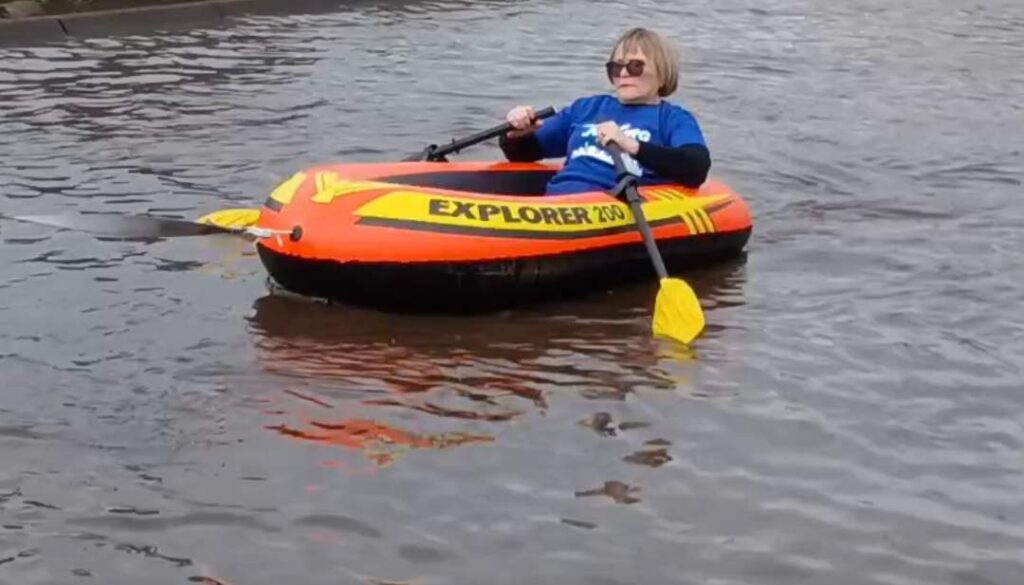
On Tuesday, April 14, 2026, residents of Dobsonville, Soweto, witnessed a sight that quickly set the internet ablaze: a 74-year-old Helen Zille, dressed in her signature blue campaign gear, rowing a small inflatable boat through a flooded street. What began as a viral social media moment has since evolved into a national debate about the state of urban infrastructure and the changing face of political campaigning in South Africa.
The Scene: Canvassing by Kayak
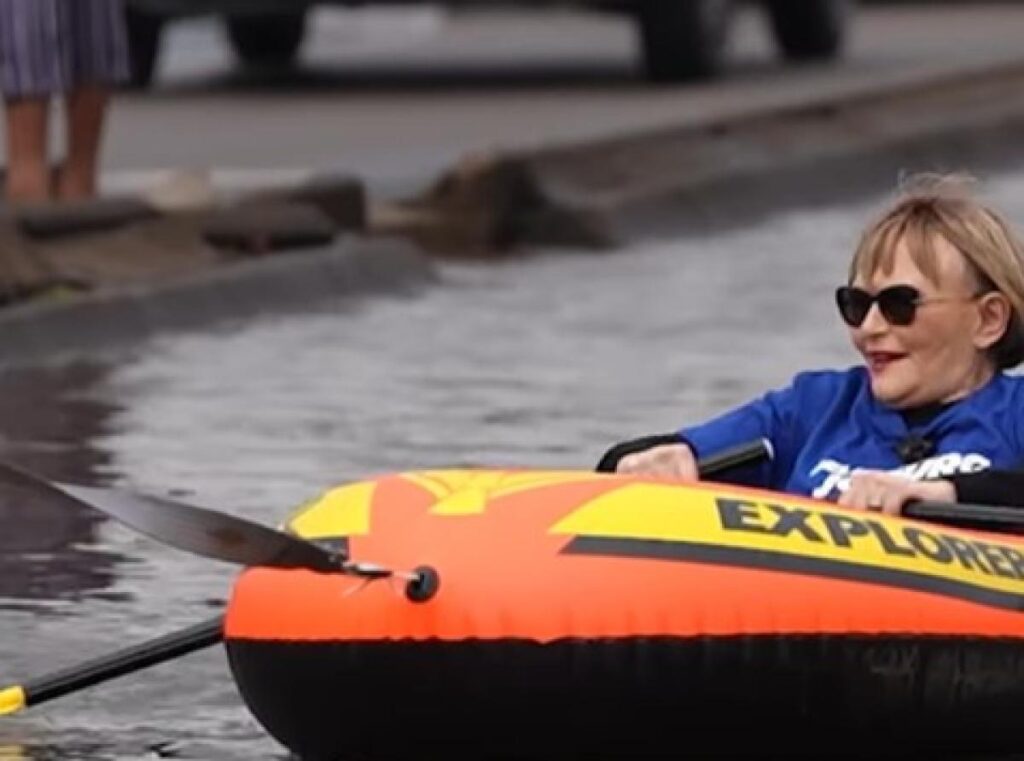
The “boat incident” wasn’t a random act of leisure; it was a calculated piece of political theater designed to highlight a catastrophic failure of service delivery. The street in question had reportedly been flooded for six years due to a blocked drainage system that the City of Johannesburg had failed to repair despite numerous complaints.
Instead of issuing a press release or standing on the dry sidewalk with a microphone, Zille opted for immersion. Clips filmed by taxi passengers and onlookers showed Zille skillfully (and somewhat surrealistically) navigating the murky water.
“Canvassing by boat… #BelieveInJoburg #Zille4Mayor,” she captioned the post on X (formerly Twitter).
The reaction was instantaneous. Social media users dubbed it the “Gogo Effect,” with some praising her “hands-on” approach and others accusing her of using the residents’ daily struggles as a “stunt show” for publicity.
The “Zille Method”: Why the Boat?
This isn’t the first time Zille has used unconventional methods to trend. Just two weeks prior, she went viral for climbing into a water-filled pothole in Douglasdale while wearing a wetsuit, swim cap, and snorkel.
For Zille’s campaign team, these stunts serve three distinct purposes:
- Visibility: In a crowded political landscape, Zille’s antics ensure the DA remains at the center of the national conversation.
- Highlighting Failure: By physically entering the potholes and flooded streets, she creates a visual shorthand for the “crumbling infrastructure” she blames on the current ANC-led coalition government.
- Provoking Action: Most notably, Zille’s stunts have a track record of getting things fixed. Within hours of the “pothole swim,” city officials were on-site to repair the burst pipe. Similarly, following the Soweto boat trip, the city reportedly sent a team to clear the drain that had been blocked for over half a decade.
Political Theater or Public Service?
The “boat campaign” has sparked a fierce divide among South African voters. Critics, such as those heard in taxi clips calling her a “sgebengu” (criminal/thief), argue that Zille is “capitalizing on poverty.” They suggest that a white politician rowing through a township flood is an image that ignores the deeper systemic inequalities and “inclusive growth” needed in the country.
However, supporters argue that Zille is the only politician actually showing the “grim reality” of what people live with. For many residents in Soweto, the fact that a politician had to row a boat for their street to be fixed after six years is an indictment of the local government, not the campaigner.
As political analyst Tebogo Ditshego noted, this represents a broader revolution in storytelling.
“As opposed to investing large sums of money in advertising… you can simply pull out your phone and tell a story about your daily experiences… this can be very effective for local government as the focus is now on service delivery.”
The Context: A City in Crisis
The “Zille Boat” story is set against the backdrop of a broader Johannesburg water and infrastructure crisis. Throughout early 2026, the city has been plagued by prolonged water outages, dry taps, and a lack of maintenance funds. Zille has pledged that if elected mayor, she will “ringfence revenue” and partner with the private sector to overhaul the aging network.
Her unconventional campaign style is an attempt to convince voters that the “DA governs well for everyone”—a message echoed by John Steenhuisen at the recent DA Federal Congress. By showing that she is willing to get wet (literally) to expose failure, Zille is positioning herself as the candidate of “action” over “talk.”
Conclusion: The Future of the Float
Whether you view it as a brilliant PR masterstroke or a desperate stunt, the “Helen Zille Boat” has achieved its goal: everyone is talking about the drains in Soweto.
As the 2026 elections approach, it seems clear that Zille will continue to push the boundaries of traditional canvassing. If the last month is any indication, South Africans should expect more snorkels, more boats, and more viral moments. In a city where the basics are broken, Zille is betting that a little bit of chaos is exactly what is needed to get the gears of government turning again.