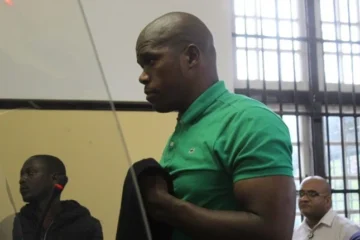
DURBAN, KWAZULU-NATAL — The corridors of the Durban Magistrate’s Court fell into a heavy, expectant silence on Thursday, April 9, 2026, as the long-awaited sentencing for the stabbing of Joshua Petersen was finally delivered. After a grueling legal process that spanned over a year, the court has sentenced the perpetrator to five years of direct imprisonment for an assault that shocked the local community and reignited a national conversation on youth violence.
The sentencing marks the end of a harrowing chapter for the Petersen family, who have spent the last eighteen months navigating a maze of medical recoveries and legal delays. While the defense argued for a non-custodial sentence, citing the accused’s age and “rehabilitative potential,” the magistrate remained firm, emphasizing that the brutal nature of the crime demanded a clear signal of societal disapproval.
The Incident: A Day That Changed Everything
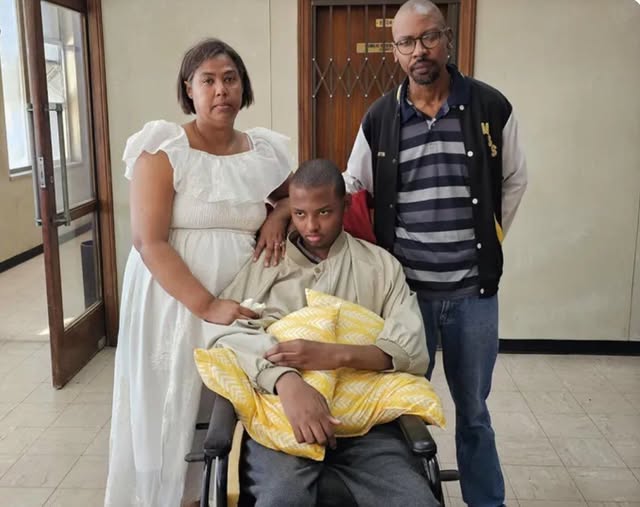
The case dates back to late 2024, in a quiet residential area of Durban, where a routine afternoon turned into a nightmare. Joshua Petersen, a well-regarded student known for his involvement in community sports, was walking home when he was intercepted by a peer. What began as a verbal altercation quickly escalated into physical violence.
Witnesses described a scene of terrifying speed: the accused produced a concealed blade and stabbed Petersen multiple times in the upper torso before fleeing. The attack was so severe that Joshua required emergency life-saving surgery at a nearby hospital. The medical report later revealed that one of the thrusts had come within millimeters of his heart, a fact that would play a crucial role in the prosecution’s argument for a heavy sentence.
Inside the Courtroom: The Sentencing Rationale
Magistrate Sibusiso Mkhize, presiding over the case, delivered a judgment that was as much a legal ruling as it was a moral commentary on the state of safety in KwaZulu-Natal.
“We are dealing with a crisis of ‘blade culture’ among our youth,” Mkhize stated during his address. “When a young person decides to carry a weapon to a confrontation, they are making a conscious choice to bypass dialogue in favor of potential lethality. The court cannot view this as a simple mistake. To do so would be an insult to the victim and a failure to the community that looks to the law for protection.”
The prosecution successfully argued that the attack was not a “crime of passion” but a premeditated act, as the accused was already in possession of the knife at the start of the encounter. This distinction moved the crime into a category that necessitated direct imprisonment rather than a suspended sentence or community service.
The Victim’s Journey: Scars Beyond the Physical
Throughout the trial, the court heard moving testimony regarding the impact on Joshua Petersen’s life. Beyond the jagged physical scars that mark his chest and back, the psychological toll has been immense.
In a Victim Impact Statement read by his legal representative, Joshua described the persistent anxiety that now accompanies his daily life. Once an outgoing teenager, he spoke of his struggle to return to public spaces and the loss of his “athletic identity” during the long months when he was physically unable to participate in the sports he loved.
The family’s financial burden was also highlighted. The costs of emergency surgery, follow-up treatments, and psychological counseling have placed a significant strain on the Petersen household, an “invisible” cost of crime that often goes unacknowledged in the courtroom.
A Regional Crisis: The Fight Against School and Street Violence
The Petersen case has become a focal point for activists in KwaZulu-Natal who are battling a surge in knife-related crimes. Statistics from the SAPS (South African Police Service) for the first quarter of 2026 show a worrying 15% increase in “Assault with Intent to do Grievous Bodily Harm” (GBH) cases involving minors and young adults in the Durban metro area.
Community Policing Forums (CPFs) have been calling for stricter search-and-seizure protocols in schools and the implementation of youth-focused conflict resolution programs. The five-year sentence handed down in the Petersen case is seen by many as a victory for those advocating for a “zero-tolerance” approach to weapons.
The Road Ahead: Rehabilitation vs. Retribution
As the prisoner is led away to begin his five-year term at a local correctional facility, the debate continues regarding the efficacy of prison as a deterrent for young offenders. While the Petersen family feels that justice has been served, social workers and some legal experts warn that the prison system often hardens young criminals rather than reforming them.
However, for the residents of Durban who have followed Joshua’s story, the sentence provides a momentary sense of relief. It reaffirms the principle that the streets belong to those who walk them in peace, not those who police them with blades.
Conclusion: Closing the Book
For Joshua Petersen, the sentencing is not a “win,” but it is a conclusion. He can now move forward knowing that his attacker has been held accountable under the laws of the country. As he continues his studies and his gradual return to the sports field, he serves as a symbol of resilience for a community that is increasingly tired of the violence that claims its children.
The case of State vs. [Accused] will likely be cited in future trials across the province, setting a stern precedent for how KwaZulu-Natal’s courts intend to deal with the rising tide of teenage violence.
Case Snapshot: State vs. The Joshua Petersen Attacker
| Detail | Information |
| Location of Crime | Durban, KwaZulu-Natal |
| Primary Charge | Assault with Intent to do Grievous Bodily Harm (GBH) |
| Sentencing Date | April 9, 2026 |
| Final Sentence | 5 Years Direct Imprisonment |
| Victim | Joshua Petersen |