PRETORIA, GAUTENG — In a major progress report on South Africa’s immigration landscape, the Department of Home Affairs (DHA) has revealed that it successfully deported 109,344 individuals over the past two financial years. The announcement, made by Minister Dr. Leon Schreiber on Thursday, April 9, 2026, marks a significant shift in the state’s approach to illegal migration, characterized by a cumulative 46% increase in enforcement activities since the formation of the Government of National Unity (GNU).
The figures underscore a “zero-tolerance” stance toward immigration violations, with the department crediting new digital technologies and intensified ground operations for the spike in removals.
The Data: A 46% Surge in Two Years
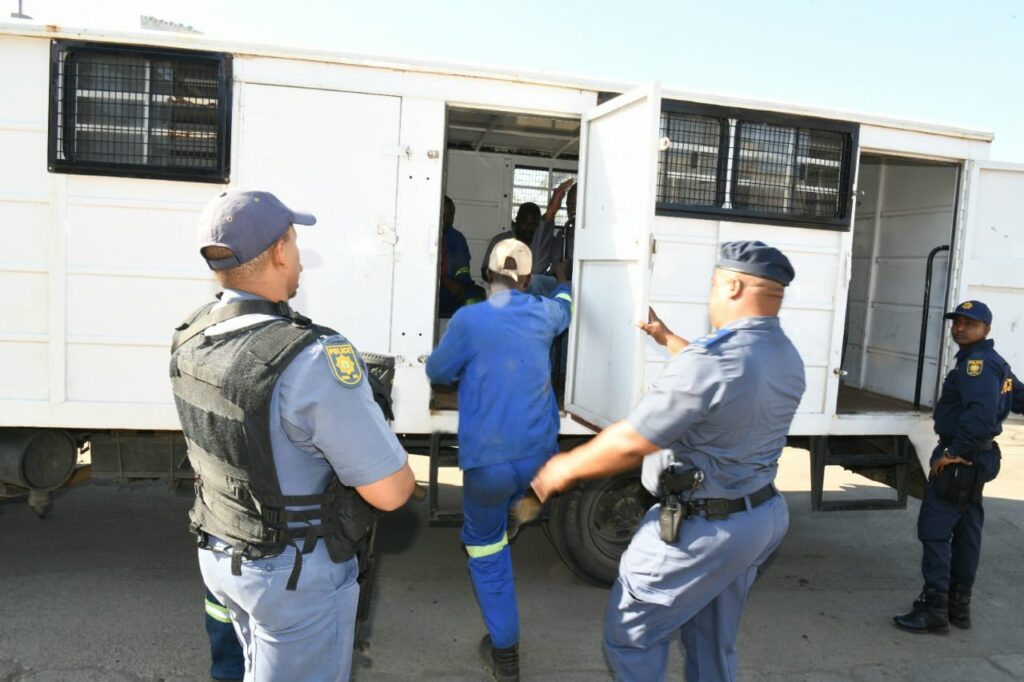
The statistics released by the department provide a year-on-year breakdown of how enforcement has scaled up.
- 2023/24 Financial Year: 39,672 deportations.
- 2024/25 Financial Year: 51,560 deportations (a 30% increase).
- 2025/26 Financial Year: 57,784 deportations (a further 12% increase).
Cumulatively, these efforts reached the 109,344 milestone by March 31, 2026. Minister Schreiber noted that these numbers are the direct “fruit of reforms” focused on modernization and efficiency. By streamlining the processing of illegal foreigners and shortening the time spent at the Lindela Holding Facility, the department has been able to facilitate more frequent and higher-volume removal operations.
The “Digital Shield”: Technology Fueling Enforcement
A central pillar of the DHA’s success has been the integration of high-tech tools into traditional policing. The department is moving away from manual, paper-based tracking in favor of a digital ecosystem designed to make it nearly impossible for illegal immigrants to remain undetected.
Key Technological Drivers:
- Electronic Travel Authorisation (ETA): The impending scale-up of the ETA system will record the biometrics of every foreigner entering South Africa, creating a digital footprint that allows authorities to identify overstayers instantly.
- Drone and Body-Camera Tech: Border and immigration officers are now increasingly equipped with drones for surveillance in difficult terrain and body cameras to ensure transparency and accuracy during “Operation New Broom” raids.
- Biometric Verification: Advanced biometric tools have allowed for the rapid identification of individuals who may be using fraudulent documentation or who have previously been deported.
“While enforcement efforts are clearly yielding fruit, we remain equally focused on deterrence and modernisation,” said Minister Schreiber. “The deployment of drone and body camera technology has already made a difference in our ability to detect and arrest anyone who is in South Africa illegally.”
Operation New Broom and Border Security
The surge in deportations has been largely attributed to Operation New Broom, a multidisciplinary campaign involving the South African Police Service (SAPS) and the Border Management Authority (BMA). These operations target high-density areas, informal settlements, and business districts where undocumented non-nationals are often employed in violation of labor laws.
Just this week, the department confirmed the deportation of seven Kenyan nationals who were found to be working in the country without valid permits. This serves as a warning to both foreign nationals and South African employers: the state is actively auditing work sites to ensure compliance with the Immigration Act.
The Economic and Legal Implications

The cost of deportation is a significant burden on the South African fiscus, involving transport logistics, temporary housing, and administrative processing. By encouraging self-deportation, the minister is attempting to reduce this cost.
Dr. Schreiber issued a stern warning to those currently in the country without documentation:
“Our message remains clear: If you are in South Africa illegally, self-deport now before we find you and ban you from ever entering our country legally in future.”
Under South African law, a formal deportation often results in the individual being declared “undesirable,” which carries a multi-year or permanent ban on re-entry. Self-deporting—returning to one’s home country voluntarily before apprehension—allows individuals to maintain a cleaner legal record, potentially allowing for legal re-entry in the future with the correct permits.
Balancing Enforcement with Human Rights
As the numbers rise, the Department of Home Affairs has also faced scrutiny from human rights organizations regarding the conditions at holding facilities and the speed of the deportation process. In response, the DHA has emphasized that all operations are conducted in strict accordance with the law and that the transition to digital records actually protects individuals by reducing the likelihood of wrongful arrest or administrative errors.
The involvement of the Special Investigating Unit (SIU) in probing past corruption within Home Affairs has also been a catalyst for change. By cleaning up internal “syndicates” that previously sold visas and identity documents, the department has ensured that its enforcement efforts are not undermined from within.
Looking Ahead to 2027
With the goal of further increasing these figures, the department is currently recruiting for several senior “Law Enforcement” and “Joint Operations” roles, signaling that the momentum of 2026 will carry into the next financial year. As the Electronic Travel Authorisation system becomes fully operational, the DHA predicts that the “net” for illegal migration will only tighten further.
For South Africa, the nearly 110,000 deportations represent more than just a number; they are a signal that the state is reclaiming its borders and re-establishing the rule of law in a sector that has faced decades of systemic challenges.
Deportation Statistics Summary (2024–2026):
| Period | Total Deportations | Percentage Increase |
| 2023/24 | 39,672 | Baseline |
| 2024/25 | 51,560 | +30% |
| 2025/26 | 57,784 | +12% |
| Cumulative | 109,344 | +46% (2-Year Surge) |