The quiet landscape of Thornville, outside Pietermaritzburg, was transformed into a scene of devastation and desperation on Thursday, March 26, 2026. In a large-scale, court-ordered operation, heavy machinery and security personnel moved in to demolish more than 150 homes that were built on land belonging to the National Transmission Company South Africa (NTCSA), a subsidiary of Eskom.
The operation has left hundreds of families—ranging from pensioners to young parents with newborns—stranded in the open, watching as years of savings and “dream homes” were reduced to rubble in a matter of minutes.
The Core of the Conflict: A “Strategic Node”
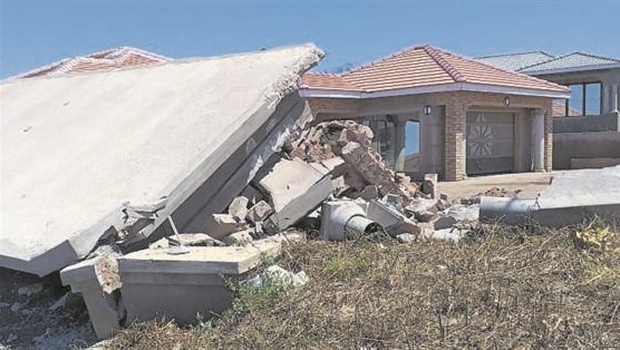
The NTCSA defended the demolitions as a “measure of last resort.” The land in question, which includes portions of the Farm Leliefontein and Erf 67 Thornville, is situated adjacent to the Ariadne Substation.
According to the utility, these plots are essential “servitudes” for high-voltage transmission lines that form the backbone of the province’s electricity grid.
- Safety Risks: Building under 400kV lines poses a lethal risk to residents in the event of a fault or pylon collapse.
- Infrastructure Delay: The illegal occupation was reportedly stalling the Transmission Development Plan (TDP), which is critical for stabilizing KZN’s power supply.
Victims of a “Land Grab” Scheme
The tragedy of the Thornville demolitions lies in the fact that many of the homeowners did not believe they were squatters. Investigations revealed a sophisticated “land grab” syndicate that had been operating in the area for years.
Unsuspecting buyers reportedly paid between R15,000 and R60,000 for plots to unauthorized individuals who claimed to own the land. Believing they had secured a legitimate piece of the “South African dream,” many residents:
- Took out bank loans or used their entire pension payouts to build.
- Invested upwards of R500,000 to R1 million on substantial brick-and-mortar structures, some featuring modern finishes and luxury furnishings.
- Had been living on the properties for months, or even years, before the bulldozers arrived.
“I spent six months building this house. It took them three minutes to flatten it. All my hard-earned money is just dust now.” — An anonymous resident at the scene.
The Timeline of the Legal Battle
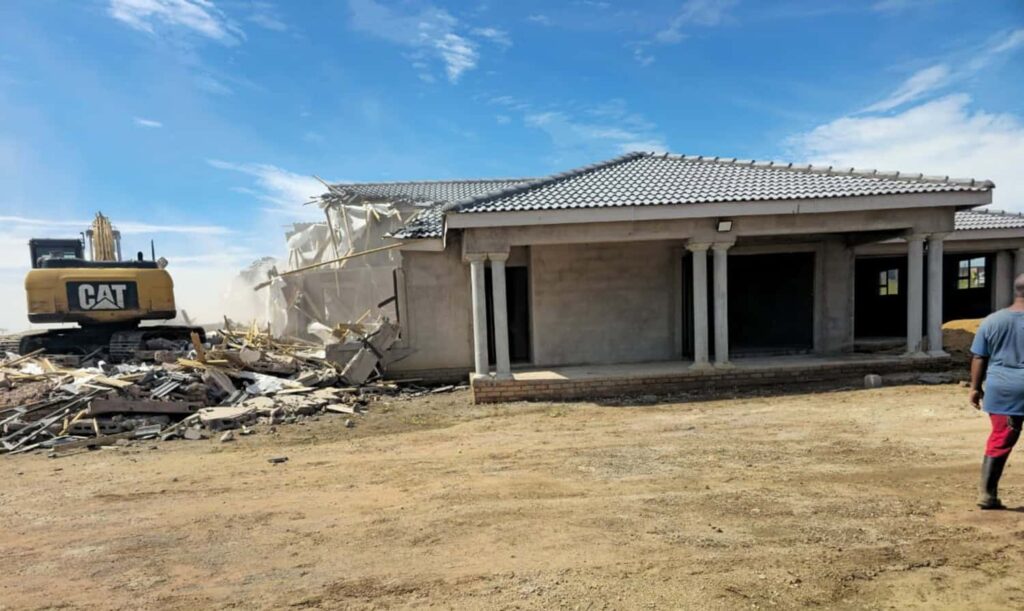
While residents claimed they were caught off guard, the NTCSA maintains that the legal process was lengthy and transparent. The Pietermaritzburg High Court issued several final orders throughout late 2025:
- July 14, 2025: The initial order was granted, giving occupants 48 hours to dismantle their own structures.
- August 29, 2025: The order was officially served in both English and isiZulu.
- November 2025: A scheduled demolition was postponed, giving residents a final “window of grace” that many hoped would lead to a permanent stay.
However, on March 26, the grace period ended. Assisted by Red Ant Security and a heavy police presence, the sheriff executed the order.
Humanitarian Crisis: “Where Will the Baby Sleep?”
The most harrowing accounts from Thursday involved families with nowhere to go. One particularly poignant story shared by local media was that of a grandmother clutching her five-day-old grandchild, pleading with the Red Ants as her home was torn down.
In some instances, demolition teams showed a small measure of mercy, sparing traditional rondavels on the properties to provide a temporary roof for children and the elderly. However, for the majority, the night was spent on the roadside, guarding furniture and appliances that had been prying-barred out of their homes moments before the roofs caved in.
The Impact on Thornville:
| Statistic | Estimated Impact |
| Houses Flattened | 150+ |
| Individual Loss | R200k – R1.2m per household |
| Primary Reason | Illegal occupation of Eskom/NTCSA servitudes |
| Displaced Residents | Hundreds, including children and pensioners |
A Warning to Potential Buyers
The Thornville disaster serves as a stark warning to South Africans looking to purchase land in peri-urban areas. The Msunduzi Municipality and the NTCSA have issued urgent advisories:
- Verify Ownership: Never buy land via social media (like Facebook Marketplace) or from individuals who cannot produce a Title Deed.
- Check Servitudes: Even if land is private, it may be restricted by “servitudes” (for power lines, water pipes, or railways).
- Zero Tolerance: Municipalities are increasingly moving toward “zero tolerance” for land invasions to protect future infrastructure projects.
Conclusion
As the sun sets over the ruins in Thornville, the focus shifts to the humanitarian response. While the NTCSA states it is “not legally obliged” to provide alternative accommodation for illegal occupiers, local NGOs and community leaders are scrambling to provide tents and food for the displaced.
The legal battle may be over for the utility, but for the families of Thornville, the long, cold journey to rebuild their lives from scratch is just beginning.