Sifiso Vusumuzi Sibanyoni will remain behind bars after the Mpumalanga High Court in Mbombela dismissed his bail appeal in connection with the murder of his estranged wife.
Judge Lindiwe Vukeya ruled that the magistrate correctly determined the 39-year-old failed to prove exceptional circumstances warranting his release.
ALSO READ | Gugulethu Thwala laid to rest after being killed in Windmill Park
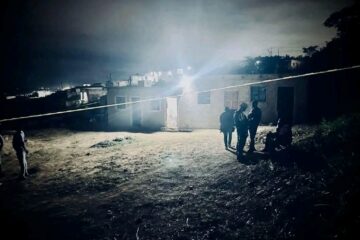
Sibanyoni faces charges of conspiracy to commit murder under Schedule 6 offences, following the fatal shooting of his wife, a doctor at Rob Ferreira Hospital, in a parking lot in Riverside on 20 November 2024.

He was arrested on 8 July 2025, more than six months after the incident.
The state’s case centres on testimony from Investigating Officer Constable Sindisiwe Precious Nyaka, who discovered that Sibanyoni allegedly approached two witnesses requesting they kill his wife.
The witnesses told police Sibanyoni drove them to Nelspruit, showed them where the deceased lived with her uncle, and pointed out Rob Ferreira Hospital, where she worked.
“The appellant informed the witnesses that the deceased leaves home around 5am to go to the gym and then goes to work as a daily routine,” Nyaka testified.
She added that Sibanyoni showed the witnesses a photograph of the deceased.
When the witnesses failed to execute the plan, Nyaka stated that Sibanyoni contacted them, demanding an explanation for their inaction.
“He told them that he had given some people R75 000 to kill the deceased, but that they had absconded with the money without having kept their end of the deal,” she told the court.
The court heard that phone records obtained through a section 205 investigation revealed Sibanyoni made calls to the two witnesses on 8 November 2024, and that all parties were in contact on the day of the shooting.
Nyaka also discovered a protection order against Sibanyoni prohibiting him from threatening to kill his wife, issued while the couple was undergoing divorce proceedings in which the deceased had claimed a 50% share of the estate.
Defence argues weak case, presents alibi
Sibanyoni insisted he was sleeping at his residential address on Crescent in Mbombela during the shooting.
He testified that from 19 November 2024, around 7pm to 8pm, he was home with his partner, son, and younger brother, only leaving at 5am the next morning after doctors informed him of the incident.
“It will be impossible for the state to bring evidence that he committed the offence as he was not at the scene of the crime,” Sibanyoni stated in his affidavit.
He denied conspiring with anyone and claimed he did not know the alleged co-conspirators.
Furthermore, his defence argued the state’s case relied heavily on hearsay evidence without direct proof linking him to the actual shooting.
Sibanyoni, who described himself as a self-employed diesel supplier with rental properties generating R80 000 monthly profit, expressed concern that his businesses would suffer during incarceration, affecting his ability to afford quality legal representation.
He also has four minor children whose welfare featured prominently in his bail arguments.
The magistrate who denied bail found sufficient prima facie evidence against Sibanyoni based on the investigating officer’s testimony.
While acknowledging Sibanyoni was not a flight risk due to his fixed address and family ties, the magistrate determined he would likely intimidate witnesses if released.
Vukeya agreed with this assessment, noting that the unique circumstances created a real probability of witness interference.
“The fact that the state witnesses were some of the people he is alleged to have conspired with or made an attempt to get them to kill the deceased, the fact that they did not execute the plan, the fact that he knows them and most importantly, the fact that they seem to be the only witnesses that link him to the alleged commission of the crime,” the judge wrote, supported concerns about witness safety.
ALSO READ | Police arrest a female suspect after an e-hailing driver was killed in Pretoria West
The court emphasised that bail proceedings differ fundamentally from trial proceedings.
“The court hearing the bail application is concerned with the question of possible guilt only to the extent that it may bear on where the interests of justice lie in regard to bail,” Vukeya stated.