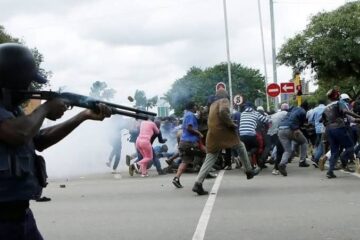
The streets of Durban’s Central Business District (CBD) descended into volatile chaos as the controversial anti-illegal immigration movement, March and March, intensified its disruptive demonstrations.
What originally began as a series of citizen-led “clean-up campaigns” has rapidly spiralled into a flashpoint of xenophobic unrest, vigilantism, and public destruction.
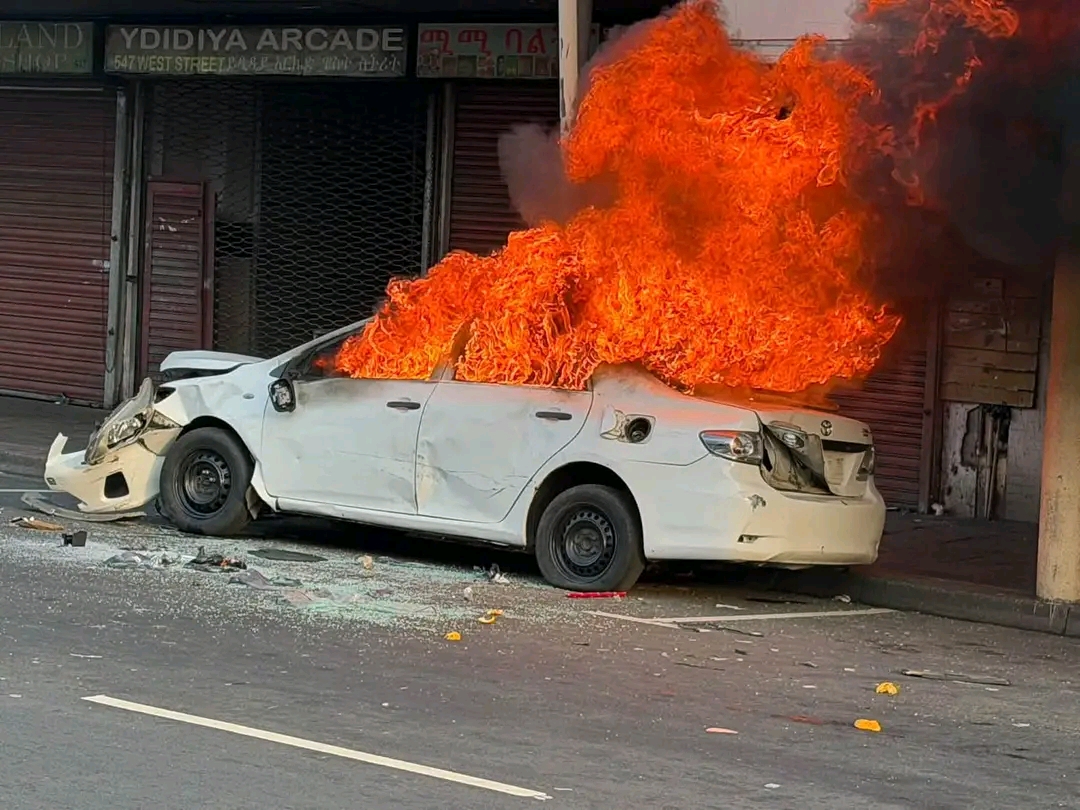
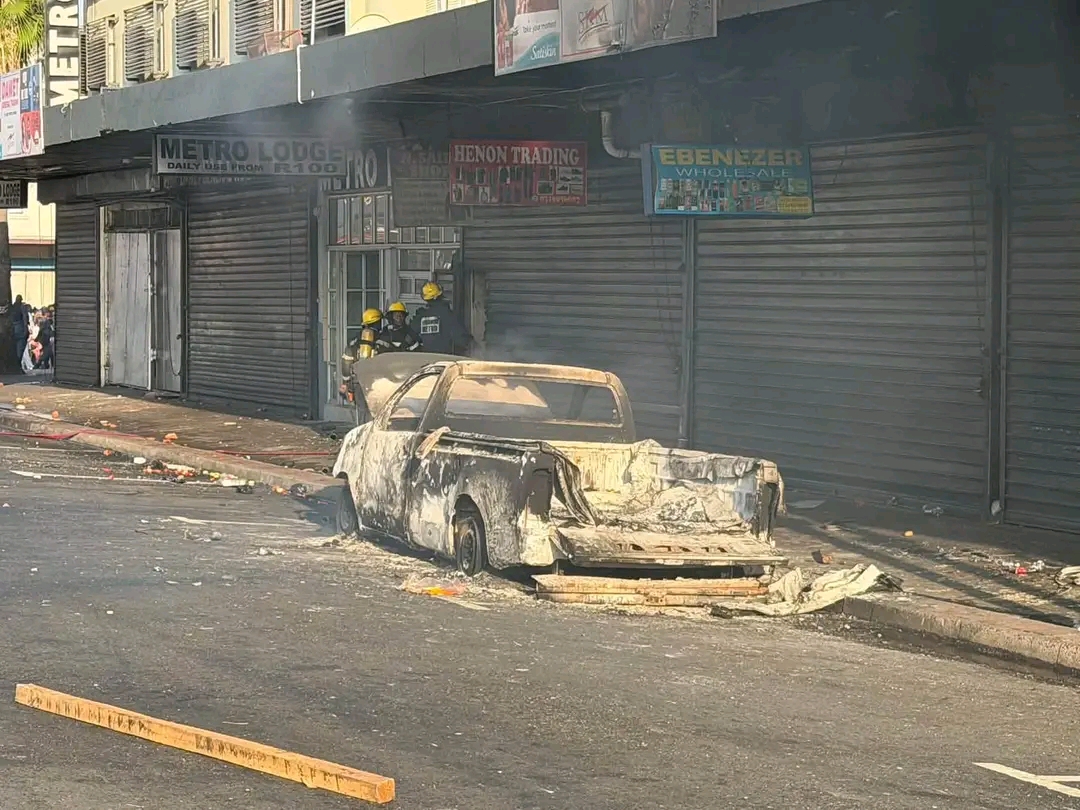
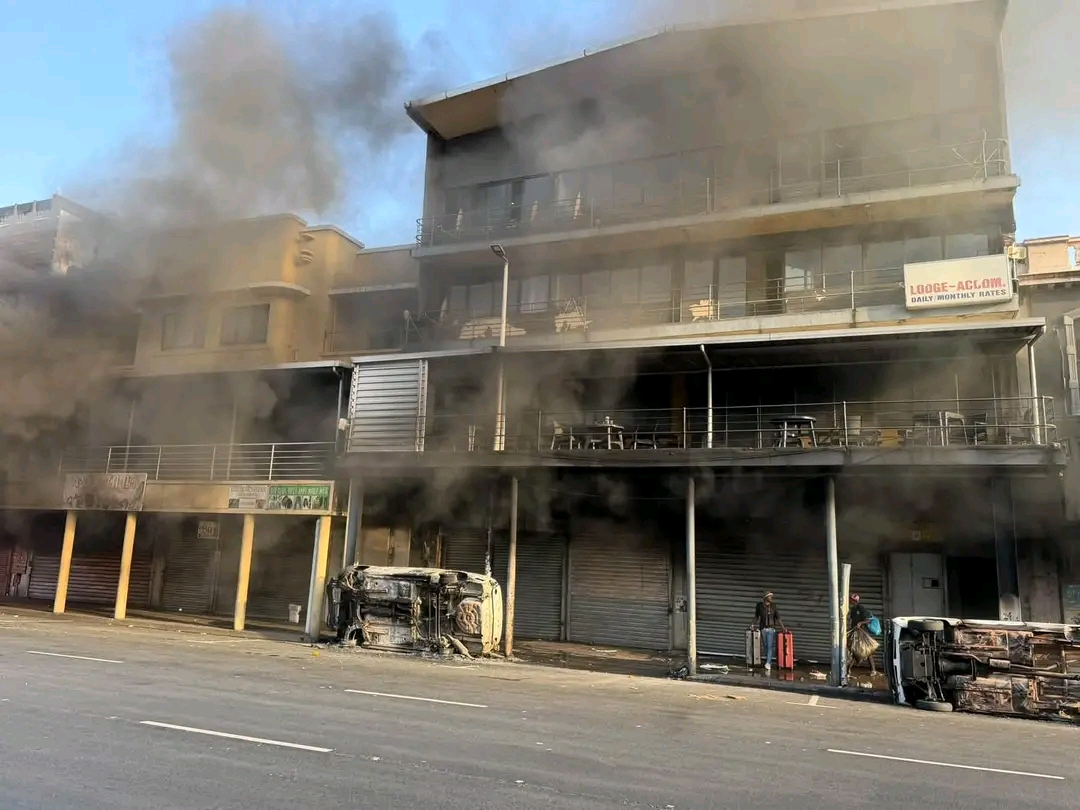
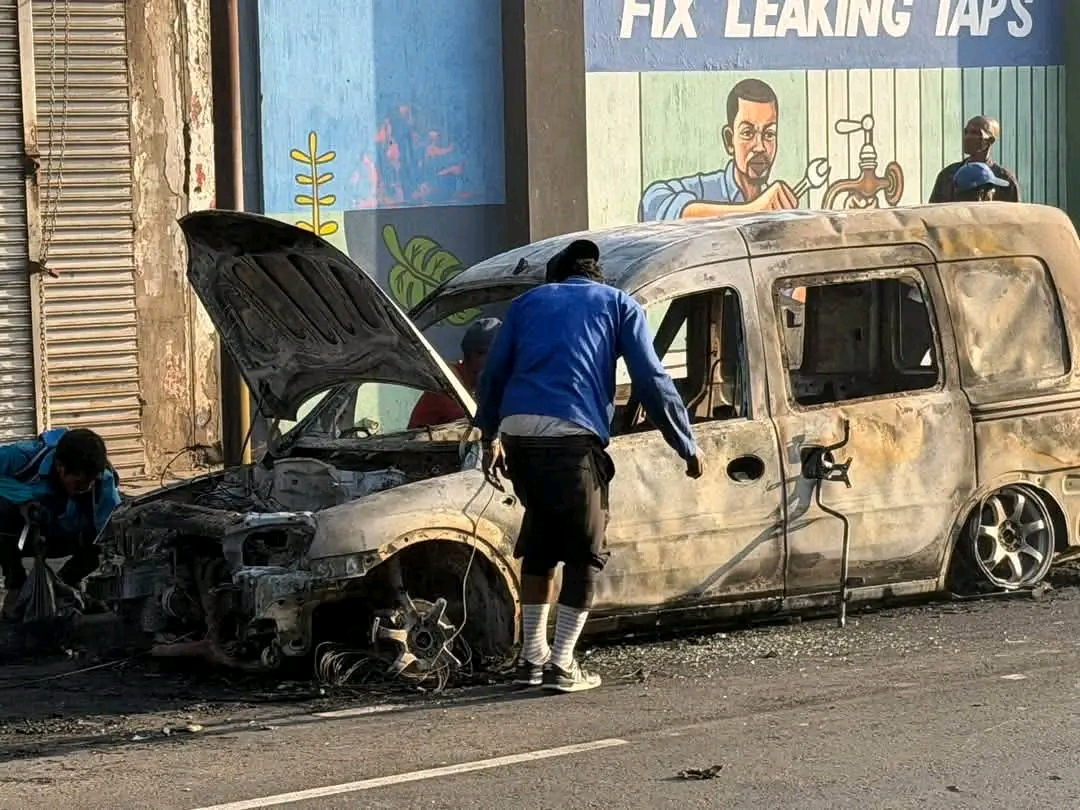
In the most recent escalations, protesters shuttered local businesses, torched multiple vehicles, and engaged in violent altercations, turning parts of the coastal city into a law enforcement battleground.
The Flashpoint at Che Guevara Road
The epicenter of the immediate crisis remains the Department of Home Affairs Refugee Reception Centre along Che Guevara Road.
For months, an encampment of displaced foreign nationals—predominantly asylum seekers fleeing conflict in nations like the Democratic Republic of Congo—has lived on the pavements outside the facility.
Tensions boiled over when March and March supporters, mobilized by founder Jacinta Ngobese-Zuma, converged on the encampment.
Framed by organizers as an effort to rid the streets of “crime and filth,” the action quickly shifted toward forcefully removing the migrants and pulling down the tarpaulins protecting their belongings.
The resulting clashes involved the exchange of stones and sticks, leaving several people injured, including prominent movement leaders.
A Documented Crisis of Displacement
While March and March maintains that its focus is strictly targeted at unlawful immigration, independent findings reveal a more indiscriminate reality.
A verification process conducted by the Department of Home Affairs earlier this year revealed that out of 457 individuals staying at the Che Guevara Road site, nearly all were documented and legally resident in South Africa.
According to investigative reports compiled by organizations like the Daily Maverick and GroundUp, many of the displaced migrants had previously been forced out of their rented homes and businesses across Durban by vigilante groups armed with machetes and knobkerries.
Landlords were pressured to evict foreign tenants, and local employers were allegedly threatened into terminating their migrant staff.
Political Undercurrents and Public Outcry
The movement’s aggressive stance is tied to an ultimatum given by the group demanding that undocumented migrants leave South Africa, a decree that has triggered widespread refugee panic and heavy security deployment.
Observers note that while the movement claims to be apolitical, it shares deep logistical and ideological ties with political factions, including Jacob Zuma’s uMkhonto Wesizwe (MK) Party, whose members have actively participated in the Durban demonstrations.
The economic and social toll on Durban is mounting. Heavy contingents of the South African Police Service (SAPS) and Metro Police—backed by armored Nyala vehicles—have been permanently stationed to separate the warring factions.
Local business owners have voiced growing frustration over unregulated protests that force city-wide shutdowns, destroy public infrastructure, and suffocate the local economy.
As the standoff between civilian vigilante groups, documented asylum seekers, and state authorities continues, Durban remains firmly on edge.