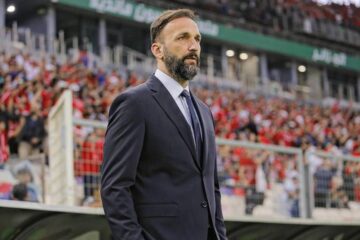
POLOKWANE, LIMPOPO — In a move that has sent shockwaves through the Betway Premiership, Sekhukhune United have officially announced the departure of head coach Eric Tinkler. The decision, confirmed by the club’s management on Monday, April 13, 2026, ends a high-stakes tenure that was marked by lofty ambitions but ultimately undone by a string of inconsistent results and a widening gap between the coach’s tactical philosophy and the board’s immediate expectations.
Tinkler, a seasoned campaigner with a reputation for building disciplined, hard-to-beat outfits, leaves “Babina Noko” at a critical juncture in the 2025/2026 season. While the club currently sits in the top half of the table, a recent slump in form—including a premature exit from the Nedbank Cup—reportedly soured the relationship between the former Bafana Bafana midfielder and the club’s ambitious hierarchy.
The Catalyst: A Season of Unmet Expectations

The 2025/2026 campaign began with significant investment and a clear mandate: secure a top-three finish and challenge for silverware. Tinkler, known for his tactical rigidity and focus on defensive solidity, initially stabilized the team. However, as the season progressed, the lack of offensive flair became a point of contention among the Sekhukhune faithful.
The Breaking Point:
- Recent Form: Sekhukhune had failed to secure a win in their last five league outings, picking up only two points from a possible fifteen.
- Goal Drought: Under Tinkler’s final ten games, the team managed a meager 0.6 goals per game, the lowest among the top eight teams.
- The Nedbank Cup Exit: A shock defeat to a lower-league side in the Round of 16 was reportedly the final straw for the board, who viewed the cup as their most viable route to continental football.
The Tactical Divide: Discipline vs. Flair
Eric Tinkler’s coaching philosophy has always been built on a “defense-first” foundation. At Cape Town City and Maritzburg United, this approach yielded significant success. However, at Sekhukhune, critics argued that the squad—boasting several high-profile creative midfielders—was being “shackled” by a overly cautious system.
Comparison of Tinkler’s Tactical Approaches:
| Metric | Cape Town City Tenure | Sekhukhune United Tenure |
| Average Possession | 54% | 46% |
| Shots on Target (per 90) | 5.2 | 3.1 |
| Clean Sheet Ratio | 35% | 42% |
| Win Percentage | 48% | 36% |
The statistics highlight a team that was defensively improved but lacked the “transitional speed” required to hurt the league’s elite teams. Internal sources suggest that senior players had expressed concerns regarding the lack of offensive freedom, leading to a “muted” dressing room environment in recent weeks.
The Board’s Statement and the “Interim” Plan
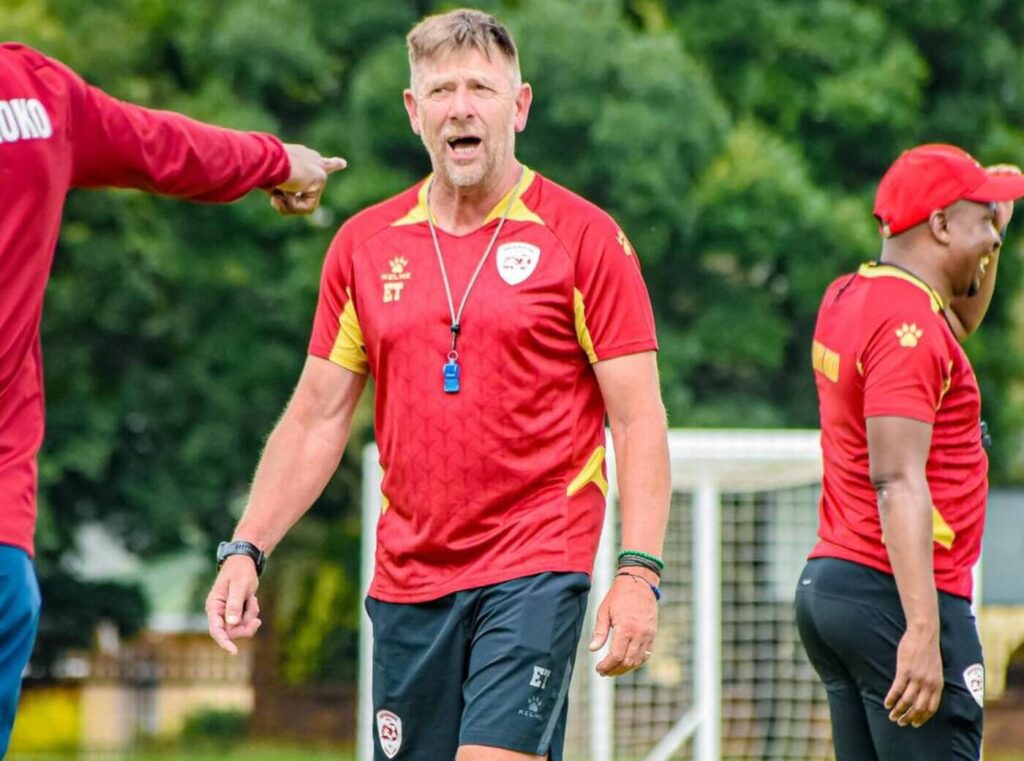
In a brief but direct press release, Sekhukhune United Chairman Simon Malatji thanked Tinkler for his service but emphasized that the club’s long-term vision required a “fresh perspective.”
“We would like to express our gratitude to Eric Tinkler for his professionalism and his efforts in stabilizing the team,” the statement read. “However, football is a results-driven business. After a thorough review of our performance over the last quarter, the board felt it was in the best interest of the club to seek a new technical direction to ensure we finish the season strongly.”
For the immediate future, the club has appointed assistant coach MacDonald Makhubedu as the interim head coach. Makhubedu, a familiar face at the club who has stepped into this role before, will lead the team for the upcoming league fixture against Orlando Pirates—a match now fraught with even more tension following the coaching change.
The Search for a Successor
Speculation is already rife regarding who will take the hot seat permanently. Sekhukhune United has established itself as one of the most financially stable and ambitious clubs outside of the “Big Three,” making the vacancy one of the most attractive in the PSL.
Potential Candidates Being Linked:
- Steve Komphela: A master of local player management and tactical flexibility.
- Kaitano Tembo: Known for his ability to blood young talent and his disciplined approach.
- A European “Wildcard”: Given the club’s history of looking toward international expertise, an appointment from the Portuguese or German markets has not been ruled out.
The Impact on the Dressing Room
For the players, Tinkler’s departure is a double-edged sword. While some may welcome a shift toward a more expansive style of play, the loss of a coach with Tinkler’s pedigree often creates a period of instability. With key fixtures looming, the “interim effect” will be tested immediately.
Star players who were brought in specifically under Tinkler’s recommendation may now find themselves fighting for their places under a new regime. The next few weeks will be a true test of the squad’s professional character and their ability to adapt to a new tactical identity mid-season.
Conclusion: A High-Stakes Gamble
Firing a coach of Eric Tinkler’s stature is always a gamble. While the board seeks a more attractive brand of football, they risk losing the defensive organization that kept them competitive. For Tinkler, a coach of his experience will likely not be out of work for long, as several other PSL clubs currently struggling at the bottom of the table will surely be monitoring his availability.
As Sekhukhune United enters the post-Tinkler era, the pressure is now firmly on the board to prove that this move was a strategic leap forward rather than a reactionary stumble. The results on the pitch over the next month will provide the ultimate verdict.
Coach Profile: Eric Tinkler at Sekhukhune
| Detail | Information |
| Duration | 14 Months |
| Matches Managed | 42 |
| Win Rate | 36% |
| Primary Achievement | Top 8 Finish (2024/25) |
| Departure Reason | Mutual separation / Performance review |
| Interim Successor | MacDonald Makhubedu |