South African singer Naledi Aphiwe has drawn a firm line regarding her name and online identity.
The Rising Tension Online

The digital landscape in South Africa often blurs the lines between public entertainment and personal boundaries.
For months, content creator Spikili captured the attention of social media users by persistently featuring Naledi Aphiwe in his skits, songs, and daily posts.

What many initially viewed as a playful, ongoing online crush eventually escalated into a point of contention.
Reports emerged that the young musician felt her personal brand and name were being overutilized without adequate respect for her private boundaries, leading to actions like blocking and discussions around formal notices.
Navigating Fame and Boundaries
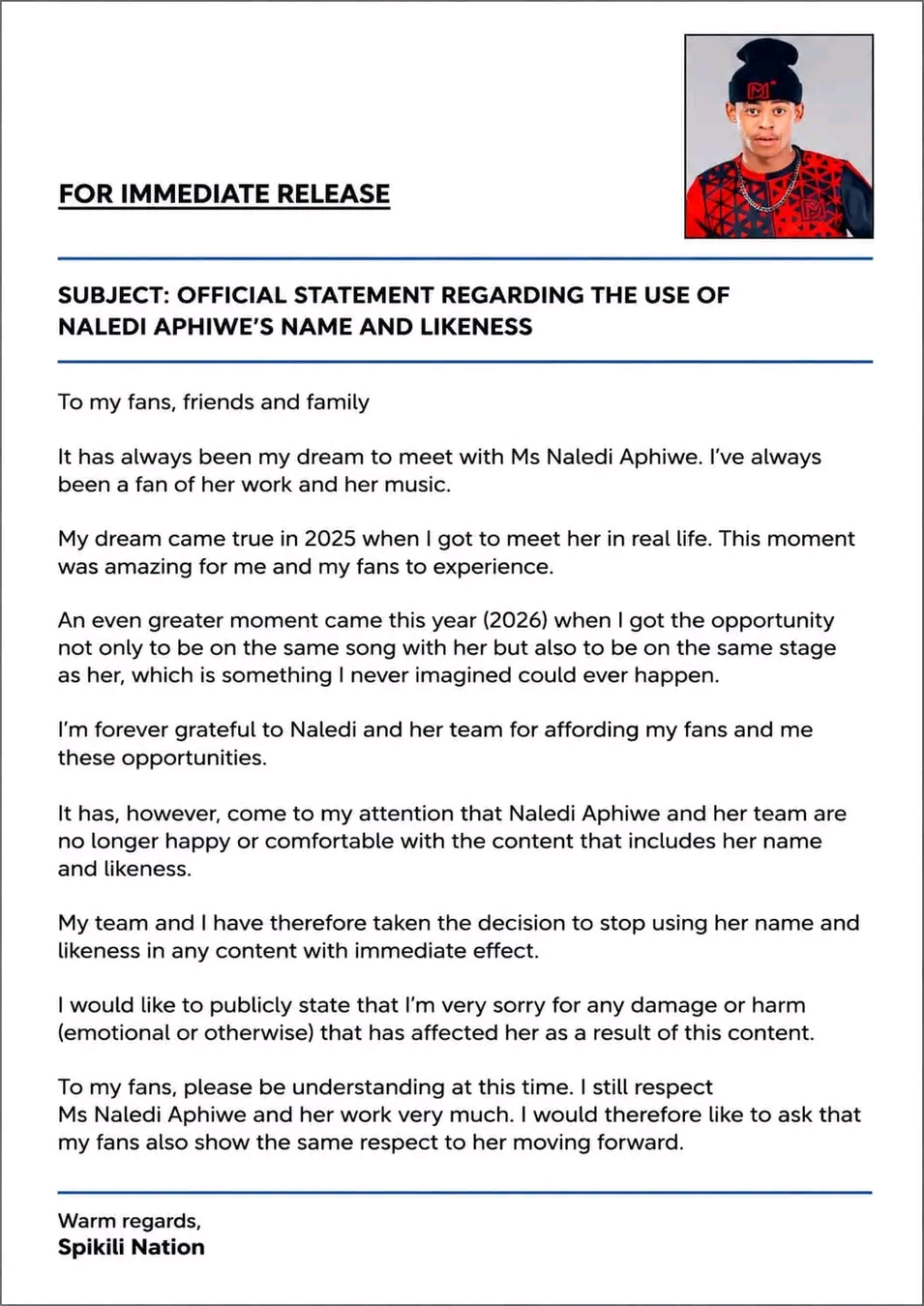
For a rising star like Naledi Aphiwe, managing public perception is a delicate task.
After achieving recognition and major success with hits like “Romeo & Juliet,” her professional career demands focus and stability.
Continuous association with viral online antics can overshadow musical achievements.

The decision to tell creators to halt using her name for unauthorized content signals a crucial shift toward professional maturity.
Artists have the right to curate their image and distance themselves from narratives that frame them purely as characters in someone else’s social media strategy.
The Impact on Digital Culture

This situation serves as a major talking point across South African digital platforms. Followers often invest deeply in the romantic or dynamic narratives spun by influencers.
However, real-life consequences and personal discomfort compel artists to draw strict lines.

As creators continue to navigate engagement metrics and viral trends, the Naledi Aphiwe and Spikili scenario underscores a broader lesson about consent and respect in online content creation.
Ultimately, personal peace and professional integrity must supersede the pursuit of online views and timeline entertainment.