The world of professional football is often painted as a landscape of glittering trophies, high-octane matches, and life-changing wealth. But for many who reach those heights, the descent can be as rapid as it is cruel. In early April 2026, the South African and Ghanaian football communities were rocked by the revelation that Edwin Gyimah, the versatile former Black Stars and Orlando Pirates defender, is now homeless.
Once a mainstay in the Betway Premiership and a respected international for Ghana, Gyimah’s current reality is a stark contrast to the days he commanded the backline at Orlando Stadium. His story is a harrowing cautionary tale of how quickly a legacy can be undone by family disputes, financial mismanagement, and the harsh isolation that often follows a professional athlete’s retirement.
A Public Plea for Help

The news broke in April 2026 when Gyimah appeared on the popular Ghanaian social intervention program, “Aunti Naa” (Oyerepa FM). In a vulnerable and emotionally charged interview, the 35-year-old veteran revealed that he, his wife, and their children are currently “moving from place to place” with no permanent roof over their heads.
“I am deeply embarrassed and broken. Today, my wife, my children, and I have nowhere to stay—we are just moving from place to place.” — Edwin Gyimah
The revelation sent shockwaves through social media, where fans who remembered his “tough-as-nails” defending for SuperSport United and Sekhukhune United struggled to reconcile that image with a man facing such dire circumstances.
Betrayal and the “House” Dispute
At the heart of Gyimah’s downfall is a bitter legal and spiritual feud with his own family. According to his testimony, the trouble began while he was still playing in South Africa. Gyimah alleges that his own sister pressured him into a property arrangement that ultimately led to him losing his primary residence in Ghana.
- The Arrangement: Gyimah claims his sister asked him to transfer ownership of his house for a sum between GHS 25,000 and GHS 50,000.
- The Discovery: Upon returning to Ghana following his release from Sekhukhune United in mid-2024, he found that his home had been “taken over” and occupied by others.
- Family Abandonment: Gyimah spoke of a profound sense of abandonment, stating that the very people he supported financially during his decade-long career in the PSL have now turned their backs on him in his hour of need.
The Industry’s Cold Shoulder
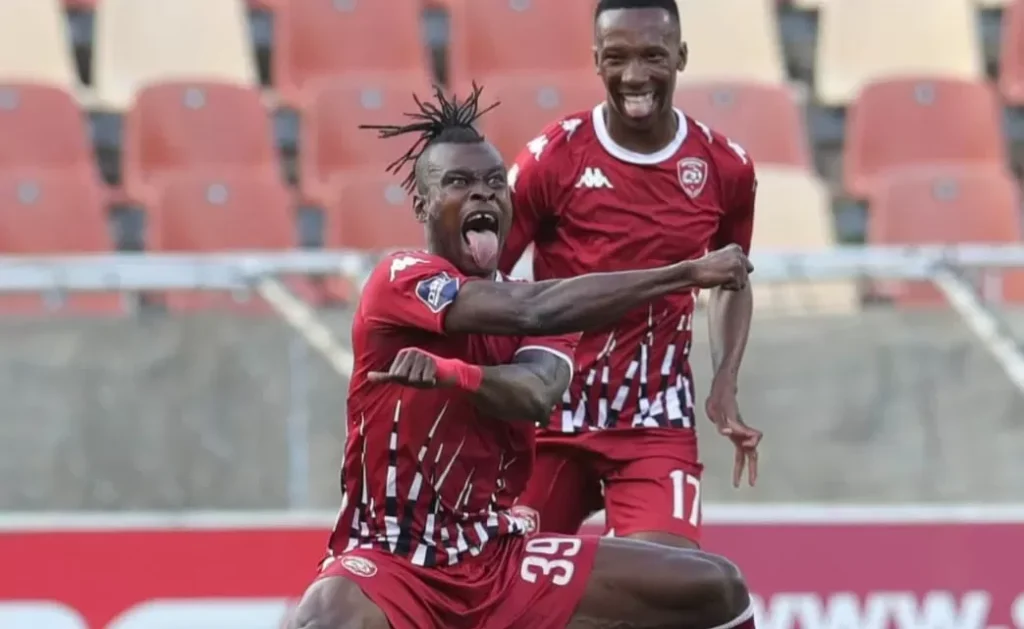
Gyimah’s struggles are not solely domestic. He also highlighted the fickle nature of the football industry. Despite his pedigree—which includes over 200 appearances in the South African top flight—the veteran has been unable to secure a new contract since being released by Sekhukhune in July 2024.
He revealed that while he received as many as 21 contract offers within a year, none of them materialized into a signed deal. He attributes much of this to a public fallout with a former agent, which he believes “blacklisted” him or damaged his reputation among club chairmen.
For a player who was once a high earner at clubs like Orlando Pirates, Bidvest Wits, and Black Leopards, the transition from being a sought-after asset to an “industry outcast” has been psychologically devastating.
The Psychological Toll: Accidents and Injury
Beyond the financial ruin, Gyimah’s health has also suffered. He mentioned surviving multiple accidents and injuries during this period of homelessness, which he believes are part of a broader “spiritual attack” originating from within his family circle.
The physical toll of living as a nomad, combined with the shame of being unable to provide for his family, has left the former CAF Champions League competitor at a breaking point.
A Lesson for the Next Generation
Gyimah’s situation has sparked an urgent debate among football analysts regarding the “post-career” support structures for African players.
- Financial Literacy: Many are calling for more robust financial education for young players who suddenly find themselves with large salaries but little knowledge of long-term asset protection.
- Mental Health Support: The isolation Gyimah describes is a common symptom for retired athletes who lose their sense of identity once the stadium lights go out.
- Family Boundaries: His story highlights the cultural pressures on African players to support extended family, often at the expense of their own financial security.
Conclusion: A Call for Intervention
As of mid-April 2026, Edwin Gyimah remains in a state of crisis. While some former teammates and fans have reached out to offer temporary support, the long-term solution remains elusive.
His fall from grace serves as a reminder that the “glory days” are fleeting. For a man who gave his blood and sweat to the game in South Africa and Ghana, the hope now is that the football fraternity can find a way to help one of its own back onto his feet.