WITSAND, WESTERN CAPE — The quiet coastal community of Witsand, situated at the mouth of the Breede River, has become the latest flashpoint for a sophisticated extortion crisis that is sweeping through the Western Cape. Over the past week, foreign national shop owners in the area have reported being systematically targeted by organized syndicates demanding “protection fees” in exchange for the right to continue operating their businesses safely.
The emergence of these “protection rackets” in a traditionally low-crime area has sent shockwaves through the local economy, forcing several small grocery stores to close their doors and leaving the remaining shopkeepers in a state of constant fear. Local authorities and community leaders are now grappling with how to dismantle these criminal networks before they gain a permanent foothold in the region.
The Modus Operandi: “Pay or Close”

The extortion attempts reportedly began in late March 2026, when several shop owners were approached by groups of men claiming to represent a “security forum.” The narrative presented to the shopkeepers was a familiar one used by extortion syndicates across South Africa: the payment of a monthly fee ensures that the shop will not be robbed or vandalized.
The Financial Burden:
- Weekly Demands: Shop owners reported demands ranging from R500 to R2,000 per week, depending on the size and turnover of the business.
- The “Joining Fee”: In some instances, the syndicate demanded an initial “registration fee” of up to R5,000 just to begin the “protection” service.
- Consequences of Refusal: Those who refused to pay reported receiving death threats, while others had their storefronts marked with graffiti or experienced “warning” break-ins where nothing was stolen, but the message of vulnerability was clearly delivered.
One Ethiopian shop owner, who asked to remain anonymous for his safety, described the moment the demand was made: “They come in broad daylight. They don’t hide their faces. They told me that if I want to keep my windows from breaking, I need to contribute to the ‘community safety fund.’ We know what that means. It’s not safety; it’s a tax on our survival.”
The Infrastructure of Extortion
Extortion is no longer an amateur crime; it has become a highly structured industry in the Western Cape. Syndicates often use a multi-tiered approach to ensure compliance and avoid police detection.
The “Protection Fee” ecosystem typically functions as follows:
- The Scouts: Individuals who monitor shop turnover and identify high-value targets.
- The Collectors: The visible face of the syndicate who make the demands and collect the cash.
- The Enforcers: Those responsible for carrying out threats if payments are missed.
- The Kingpins: The behind-the-scenes orchestrators who launder the money and provide the legal or physical “muscle” to keep the operation running.
In Witsand, the sudden influx of these demands suggests a deliberate expansion by syndicates traditionally operating in larger metros like Cape Town or George.
Policing and the Community Response
The South African Police Service (SAPS) in the Hessequa Municipality has confirmed that it is investigating multiple cases of intimidation and extortion. However, policing these crimes is notoriously difficult because victims are often too terrified to provide formal statements or testify in court.
Provincial Interventions:
The Western Cape Government has recently bolstered its Extortion Task Team, which works closely with specialized units to track the financial trails of these syndicates.
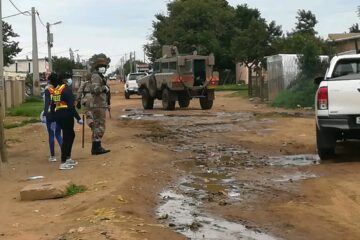
- Increased Patrols: SAPS and local neighborhood watches have increased their presence around the main business corridors in Witsand.
- Anonymous Reporting: Authorities are urging shop owners to use the provincial extortion hotline to report demands without revealing their identities.
“Extortion is a cancer that eats away at the local economy,” said a spokesperson for the Witsand Residents’ Association. “If our local shops close, it’s the elderly and the vulnerable who suffer the most because they lose access to affordable food. We stand with these shop owners and call for a zero-tolerance approach to these thugs.”
The Economic Fallout
The impact on Witsand’s economy is already visible. For small-scale traders, the “protection fee” often represents the entirety of their profit margin. When forced to pay, many are unable to restock their shelves or pay their own rent, leading to a slow economic strangulation of the business.
Furthermore, the atmosphere of intimidation discourages investment. If Witsand becomes known as a high-risk area for small businesses, new entrepreneurs will bypass the town, leading to long-term stagnation.
A Regional Trend
The situation in Witsand reflects a broader provincial crisis. From the “construction mafia” in Cape Town to the “protection rackets” in the Garden Route, extortion has become the preferred revenue stream for organized crime. The Western Cape MEC for Police Oversight and Community Safety has noted that these syndicates often prey on foreign nationals specifically, betting on the fact that they may feel too marginalized or fearful of the legal system to seek help.
Conclusion: Reclaiming the Streets
The battle for Witsand’s business sector is far from over. While the deployment of extra police and the focus of the Extortion Task Team are positive steps, community leaders believe the real solution lies in collective resistance.
“If one shop pays, they all have to pay,” says a local civic leader. “But if the community stands together and refuses to let these criminals dictate who can trade in our town, the syndicates will lose their power. We must protect our neighbors, regardless of where they were born.”
As of mid-April 2026, tensions remain high, but there is a growing sense of resolve among the Witsand business community. The success of the upcoming police operations will be the ultimate test of whether Witsand remains a safe haven for trade or a playground for extortionists.
Witsand Extortion Snapshot (April 2026):
| Category | Details |
| Primary Targets | Foreign-owned grocery and general stores |
| Weekly Fee Demanded | R500 – R2,000 |
| Threat Level | High (Death threats and vandalism) |
| Law Enforcement | SAPS Extortion Task Team engaged |
| Current Status | Ongoing investigation; several shops temporarily closed |