The murder trial of Kaizer Chiefs defender Luke Fleurs has taken a dramatic and contentious turn. On Wednesday, April 22, 2026, the six men accused of the 2024 hijacking and killing appeared in court, where their defense team leveled serious allegations of police brutality. These claims have now threatened to overshadow the primary charges of murder and robbery, as the court must determine if the suspects’ official statements were obtained under duress.
The six accused—Ndumiso Moswane (26), Fernando Sive (25), Nhlakanipho Dlamini (21), Franky Xaba (25), Maredi Mphahlele (36), and Thembinkosi Hlomikhawu (31)—remain in custody as the legal battle enters a new, volatile phase.
Allegations of Coercion and Physical Abuse
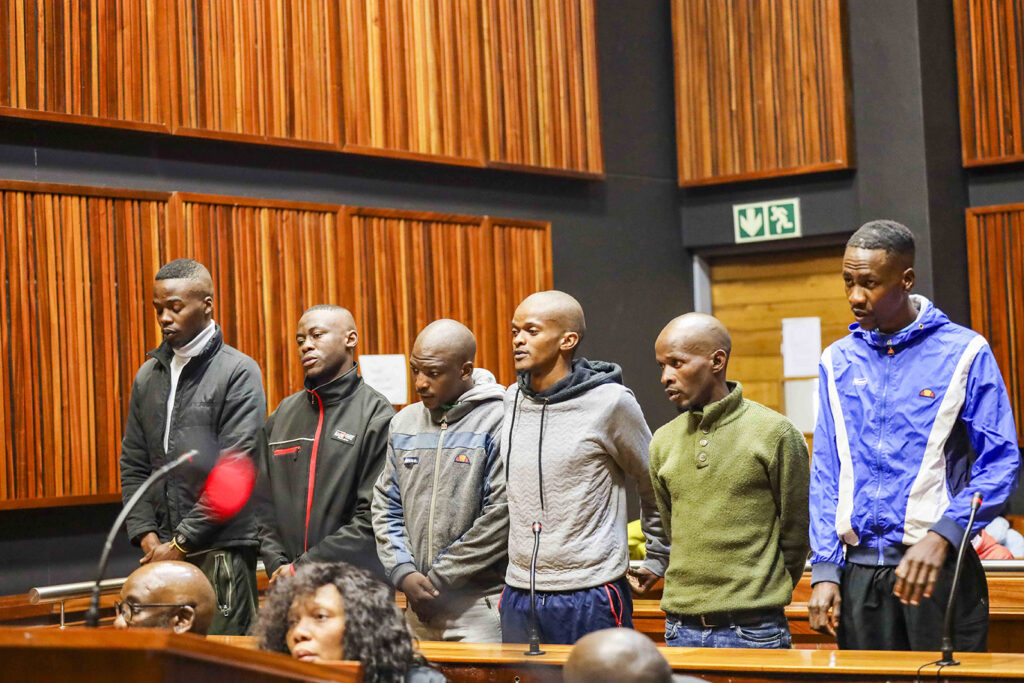
During the most recent hearing, the defense argued that at least three of the suspects were subjected to “sustained violence” by members of the South African Police Service (SAPS) following their arrests. The most shocking claim involved one of the younger suspects, whose hands were allegedly so badly injured during the interrogation that he was physically unable to hold a pen.
According to the defense, this suspect was forced to use his thumbprint to “sign” a confession he had not freely given. The defense team contends that the police used “extra-judicial” tactics to extract information, a claim that, if proven true, could render the State’s most critical evidence—the signed statements—inadmissible in a court of law.
The “Trial Within a Trial”
Legal experts suggest that the court is now heading toward a “trial within a trial” (a voir dire). In this secondary legal proceeding, the judge will pause the main murder trial to focus exclusively on the admissibility of the confessions.
- The Defense’s Goal: To prove that the suspects were assaulted and that the statements were not “made freely and voluntarily” as required by the Criminal Procedure Act.
- The Prosecution’s Stand: The State remains firm, asserting that they have a strong case. They maintain that the arrests were conducted within the bounds of the law and that the suspects’ claims are a calculated attempt to derail the pursuit of justice.
Two Years of Waiting for the Fleurs Family
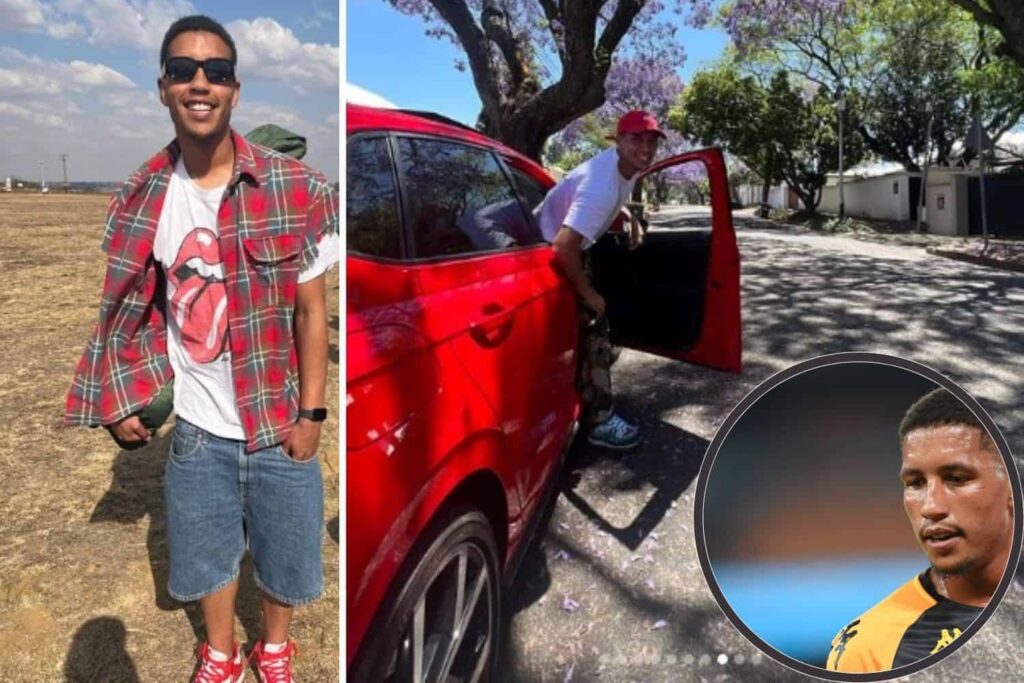
For the family of Luke Fleurs, the latest developments are a bitter pill to swallow. It has been two years since the “classy defender” was shot dead at a petrol station in Florida, Johannesburg, on April 3, 2024.
At just 24 years old, Fleurs was a rising star whose career at Kaizer Chiefs was just beginning to peak. The image of the young footballer at the petrol station, confronted by armed men before being fatally shot in the upper body, remains a haunting symbol of South Africa’s struggle with violent crime.
“We are just waiting for justice,” a family spokesperson noted outside the court. “Every time there is a postponement or a new claim about police behavior, it reopens the wound. We want to know what happened to Luke, and we want those responsible to be held accountable.”
The Shadow of Institutional Failure
The allegations of police assault in the Fleurs case come at a sensitive time for the SAPS. A recent report by the Daily Maverick highlighted that while numerous high-profile assassinations have occurred in South Africa over the last three years, the “masterminds” behind these crimes often evade accountability.
In the Fleurs case, while the direct perpetrators were caught relatively quickly, the legal hurdles regarding police conduct have slowed the momentum of the trial. If the suspects were indeed assaulted, it highlights a persistent issue in the South African criminal justice system: the pressure on police to “close cases” sometimes leads to shortcuts that ultimately jeopardize the legality of the entire prosecution.
What’s Next in the Trial?
The case has been postponed to next week to allow the State to prepare its response to the assault allegations. The upcoming testimony from the investigating officers will be pivotal. The court will likely require medical records of the suspects from the time of their initial incarceration to verify if the alleged injuries match the timeline of their interrogation.
If the court finds that the police used brutality to extract the thumbprinted statements, the State may have to rely solely on forensic evidence—such as DNA found in Fleurs’ recovered vehicle and CCTV footage from the petrol station—to secure a conviction.
As the legal gymnastics continue, the football world and the Fleurs family remain in a state of suspended grief, hoping that the quest for truth does not get lost in the procedural battle between the accused and the law.