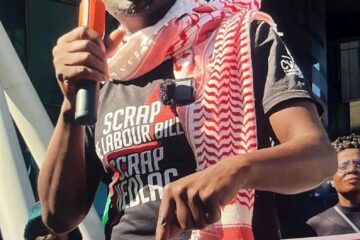
In a stern and somber address to the nation on Tuesday, April 28, 2026, President Cyril Ramaphosa issued a high-stakes warning against the rising tide of anti-foreigner sentiment and threats of xenophobic violence. Speaking from the Union Buildings in Pretoria, the President’s address followed a series of “national shutdown” threats and inflammatory social media campaigns targeting migrant-owned businesses in Gauteng and KwaZulu-Natal.
Ramaphosa’s message was unequivocal: South Africa cannot afford to descend into the chaos of 2008 or 2015, and those who incite violence under the guise of patriotism will face the full “might of the law.”
A Climate of Rising Tension
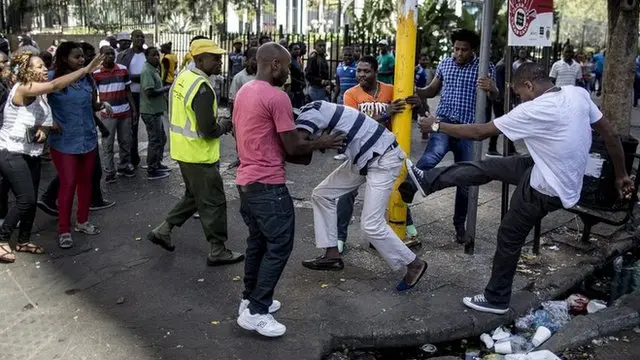
The President’s intervention comes at a critical juncture. For the past month, various fringe political movements and “community safety” groups have intensified their rhetoric, blaming foreign nationals for the country’s high unemployment rate—which currently sits at 32.1%—and the strain on public healthcare and housing.
These groups had organized a “National Clean-up” scheduled for early May, which intelligence reports suggested was a thinly veiled precursor to coordinated attacks on foreign-owned spaza shops and informal settlements.
“To target someone because of their country of birth is not only a crime against our constitution; it is a crime against our own history,” Ramaphosa stated. “We were once a people who sought refuge across the borders of this continent. To turn our backs on that solidarity now is to betray the very essence of Ubuntu.”
The Economic Fallacy of Xenophobia
A significant portion of the President’s speech was dedicated to debunking the narrative that the removal of foreign nationals would be a “silver bullet” for South Africa’s economic woes. He challenged the notion that migrants are the primary cause of joblessness, pointing instead to structural issues, the energy crisis, and the need for faster industrialization.
Ramaphosa warned that xenophobic attacks have a direct and devastating impact on South Africa’s standing in the African Continental Free Trade Area (AfCFTA).
“We are a nation that depends on trade with our neighbors. When we attack their citizens here, we jeopardize the jobs of South Africans who work in companies that export to the rest of the continent,” the President explained. He noted that South African retail giants and telecommunications firms operating across Africa often face retaliatory threats when violence erupts at home.
Addressing the Root Causes: The Rule of Law
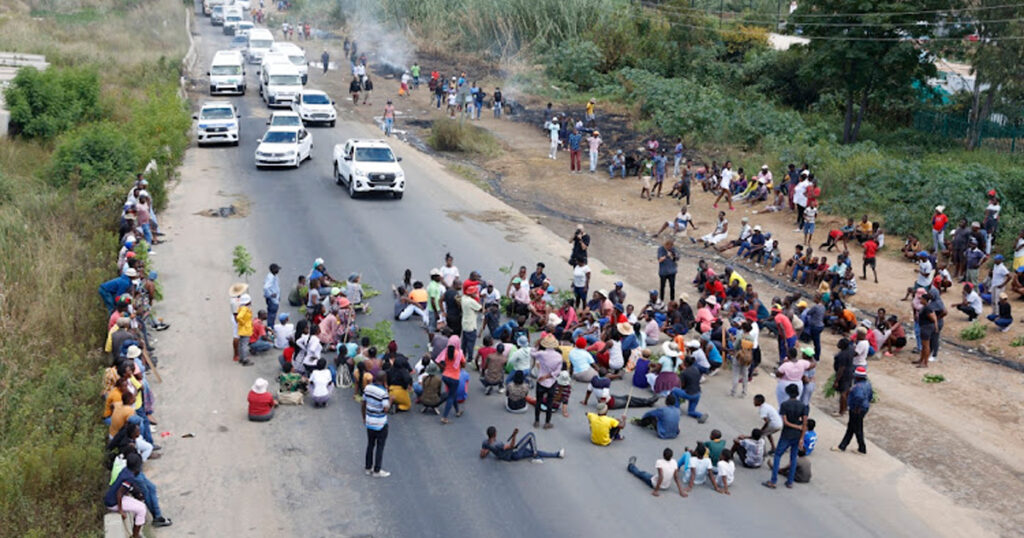
While condemning the violence, Ramaphosa acknowledged the legitimate concerns of citizens regarding illegal immigration and the “informalization” of the economy. However, he insisted that these issues must be addressed through state institutions, not “vigilante justice.”
The Government’s Five-Point Plan to Prevent Unrest:
- Operation Shanela Intensification: Increased police visibility in identified “hotspots” like Diepsloot, Hillbrow, and Alexandra.
- Border Security Strengthening: The deployment of additional Border Management Authority (BMA) officers to curb illegal entries.
- Labour Law Enforcement: Strict inspections of businesses to ensure compliance with the Employment Services Act, ensuring that South African citizens are prioritized for entry-level roles.
- Intelligence-Led Arrests: Targeting the “online instigators” who use social media to coordinate attacks.
- Community Dialogues: Launching a series of town hall meetings to mediate between local residents and migrant communities.
The “Patriotism” vs. “Prejudice” Debate
The President took a direct swipe at political leaders who use inflammatory language to garner votes. With the political landscape becoming increasingly fractured, some parties have adopted “South Africa First” platforms that lean heavily on anti-migrant rhetoric.
“There is a thin line between a love for one’s country and a hatred for one’s neighbor,” Ramaphosa cautioned. He urged political leaders to exercise “revolutionary discipline” and to avoid scapegoating vulnerable groups for complex socio-economic problems.
The Human Cost
Beyond the politics and the economics, the President reminded the nation of the human cost of xenophobia. He referenced the tragic death of Elvis Nyathi in 2022 and other victims of mob justice, describing these events as “stains on the soul of our nation.”
The address included a call to religious leaders, civil society, and educators to reinforce the values of tolerance and pan-Africanism in their respective spheres of influence.
Conclusion: A Choice of Two Paths
President Ramaphosa concluded his address by presenting South Africans with a choice: to be a nation that leads Africa through cooperation and law, or a nation that isolates itself through fear and violence.
“We will not allow our country to be turned into a wasteland of hatred,” he concluded. “The security forces are on high alert. To those who are planning to disrupt the peace: we see you, and we will find you.”
As the country moves toward the winter months—traditionally a period of heightened social unrest—the President’s warning serves as a final plea for calm. Whether the state’s security apparatus can back up these words with action remains the defining question for the weeks ahead.
Xenophobia in SA: A Statistical Context
| Year of Peak Unrest | Primary Locations | Impact |
| 2008 | Alexandra, Diepsloot, Reiger Park | 62 deaths; 100,000+ displaced |
| 2015 | Durban, Johannesburg CBD | 7 deaths; widespread looting |
| 2019 | Gauteng Province | Diplomatic rift with Nigeria/Zambia |
| 2026 (Threat) | National | High Alert; Security deployments active |
How can local communities better integrate and resolve conflicts without resorting to violence?