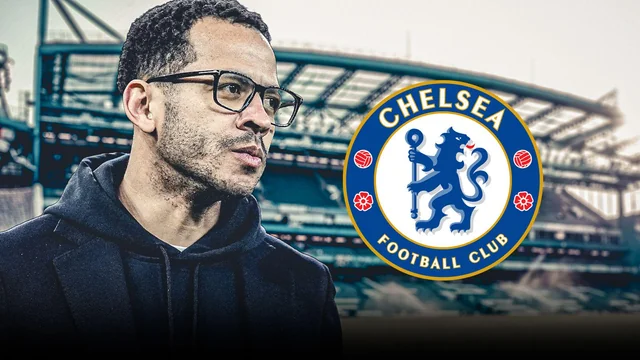
The revolving door at Stamford Bridge has claimed another victim. In a decision that has sent shockwaves through West London on Wednesday, April 22, 2026, Chelsea Football Club officially parted ways with head coach Liam Rosenior.
The 41-year-old’s tenure lasted less than four months, making it one of the shortest and most tumultuous managerial stints in the history of the Premier League. As the BlueCo ownership group searches for its fourth permanent manager in two years, the fallout of the “Rosenior Experiment” highlights a club in a state of profound identity crisis.
The Final Straw: A Night of Dejection in Brighton

The writing was effectively on the wall following Tuesday night’s demoralizing 3–0 defeat to Brighton & Hove Albion. For Rosenior, returning to the club where he began his coaching journey was supposed to be a sentimental milestone; instead, it became his professional obituary at Chelsea.
The loss was more than just a bad result—it was a statistical catastrophe. It marked Chelsea’s fifth consecutive Premier League defeat without scoring a single goal, a drought the club hasn’t experienced since 1912. The traveling fans, who have grown increasingly vocal in their protests against the ownership, met the final whistle with a chorus of boos that made Rosenior’s position untenable.
A Doomed Appointment?
When Rosenior was lured away from RC Strasbourg in January 2026 to replace Enzo Maresca, the appointment was met with skepticism. Despite his success in France—leading Strasbourg to European qualification—critics questioned whether a coach with limited top-flight experience in England could handle the egos and expectations of a billion-pound squad.
Rosenior’s “articulate” style of management, which often involved deep philosophical dives into the “man-age” of players, became a target for social media mockery as results faltered. Reports suggest that the relationship between the coach and the dressing room fractured early on. High-profile stars like Enzo Fernández and Marc Cucurella reportedly questioned the tactical shift from Maresca’s system, a divide that was laid bare when Fernández was briefly dropped for disciplinary reasons in March.
The Statistical Nosedive
The numbers behind Rosenior’s short reign make for grim reading. Since taking over in January, he managed just 5 wins in 13 Premier League matches, leaving Chelsea seven points adrift of a Champions League spot.
- Goals Scored: 0 in the last 450 minutes of league football.
- Continental Exit: Eliminated from the Champions League by Paris Saint-Germain (8–2 on aggregate).
- League Cup: A disappointing early exit that drained the squad’s morale.
The “New Era” promised by the BlueCo hierarchy—built on data, youth, and a multi-club model—has instead resulted in a squad that looks tactically adrift and emotionally drained.
The Financial Fallout
Rosenior’s departure is not just a sporting failure but a massive financial headache. Having signed a six-and-a-half-year contract through 2032 just months ago, Chelsea could have been liable for a payout exceeding $30 million.
However, reports from Sky Sports suggest the club may have protected themselves with a “break clause” related to performance metrics. While the final settlement is unknown, the constant cycle of hiring and firing is putting immense strain on Chelsea’s compliance with Profit and Sustainability Rules (PSR).
What Happens Next?
The timing of the sacking is particularly brutal. Chelsea is scheduled to play an FA Cup semi-final against Leeds United this Sunday at Wembley. The club has confirmed that Calum McFarlane will take charge in a caretaker capacity for the fixture.
As for a permanent replacement, the rumor mill is already spinning:
- Ruben Amorim: The Sporting CP boss has been a long-term target and is seen as a coach capable of imposing a clear structure.
- Thomas Frank: The Brentford manager remains highly regarded for his overachievement with limited resources.
- The “Big Return”: In desperate times, the names of Thomas Tuchel or even José Mourinho are being whispered by a nostalgic fan base, though the current owners seem unlikely to retreat to the past.
A Legacy of Instability
For Liam Rosenior, the Chelsea job will likely be remembered as a case of “too much, too soon.” He is a bright, talented coach whose work at Hull City and Strasbourg proved his potential, but he was thrown into a cauldron that has melted more experienced managers.
For Chelsea, the search for a savior continues. Until the ownership can align their long-term vision with the immediate realities of the Premier League, Stamford Bridge remains a place where “long-term projects” go to die. As McFarlane prepares the team for Wembley, the ghost of 1912 looms large, and the “Pride of London” is searching for a way to simply find the back of the net.